
How to Kickflip: What the Best Tutorials Actually Teach You
Rodney Mullen invented it by accident. Forty years later it's still the trick that humbles everyone — here's what the best tutorials actually agree on.
Browse Kickflip tutorials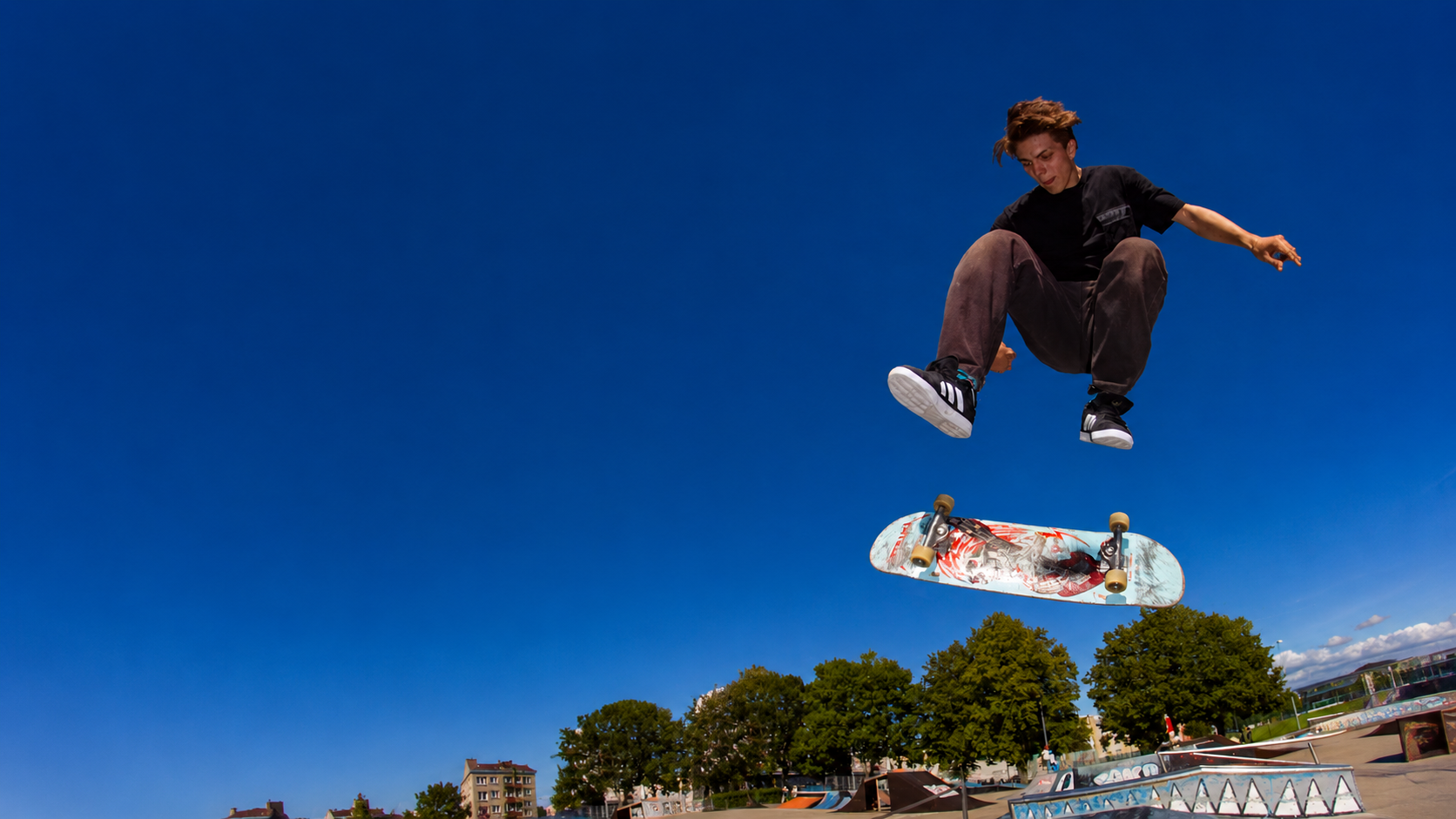
The kickflip is probably the reason half of us started skating. Rodney Mullen invented it in the early 80s almost by accident — he was working on higher ollies and flipped the board without meaning to. Forty-something years later it's still the trick everyone wants to learn first, and still the one that humbles people the longest.
Here's what the best tutorials on the internet actually agree on.
Get comfortable before you start
Every good kickflip tutorial says the same thing upfront: if you're not comfortable on your board yet, this trick will fight you. Get your ollies solid first. Not perfect — solid. If you can ollie consistently and land on the bolts, the timing and rhythm of the kickflip will come to you much faster. A few shove-its helps too, just for general board feel.
Foot position
Back foot sits on the tail towards the toe side, close to the pocket rather than hanging off the edge. Front foot goes slightly behind the front bolts, angled so your toes are near the middle of the board.
That said — there's no single correct foot position. Taller skaters flick from a different spot than shorter ones. Some people flick off the nose, some off just below the front trucks. The zone matters more than the exact spot. Find what works for you within it, and then be consistent about setting up the same way every single try.
The flick is not what you think it is
This is where most people go wrong. The kickflip flick is not a sideways ankle roll. It's not kicking your whole leg out. It's a diagonal forward motion — more like kicking a football than snapping your ankle sideways.
Think about it anatomically: your ankle doesn't actually have much range of motion in the sideways direction. What it does well is move up and down, and your hips rotate in and out. The kickflip uses both of those natural movements together. Your knee rolls out, your foot flicks forward and up off the nose, and your foot naturally rises into the air at the end of the motion. That rise is what keeps your front foot above the board so you can land on it.
If you're flicking with your pinky toe or kicking sideways, your front foot ends up below the board. You can't land on something that's above your feet.
A useful mental cue: plant your big toe on the nose and kick through it, like you're kicking a ball. That single image fixes a lot of bad habits.
Timing: the board has to be in the air before you flick
The most common timing mistake is flicking too early, while the wheels are still on the ground. If you flick with resistance beneath the board, it can't flip properly.
Pop first. Let the tail hit the ground. Let the board rise. Then flick. When the board is floating in the air it essentially weighs nothing — you don't need to kick hard, you just need to roll it over. The flick should feel soft and controlled, not aggressive.
The height of your nose is controlled by how high you bring your front foot before the flick. Lift your front foot higher before you flick and the board gets more air time to rotate. Simple as that.
Do the drills before you commit
Two drills that genuinely work:
- Half flips — jump, flick softly, and just get the board to roll over halfway without trying to land on it. The goal is to feel the board rotating underneath you while your feet stay above it. Most beginners never experience this feeling and it holds them back for months.
- Tail stop flick — stand still, back foot on the tail, and just practice the flick motion with your front foot against the grip tape without popping. This isolates the mechanics so you can feel exactly where your foot needs to be and which part of your shoe is making contact.
The point of both drills is the same: a slow, efficient flick beats a fast, sloppy one every time. Your half flip and your hardest flick probably aren't as different as you think.
Common mistakes
- Board flipping the wrong way — you're either flicking too early (wheels still on the ground) or flicking down instead of forward and out.
- Board rotating or turning — your shoulders are turning. Keep them lined up with the board. Where your shoulders go, everything follows.
- Board flies in front of you — your weight is too far back. Lean your upper body towards the nose before you pop. It feels weird at first but it's essential.
- Can't get your front foot back on — you're leaving your leg out after the flick. Flick and immediately pull your front knee up towards your chest. The back foot catches and stops the rotation; the front foot just needs to come back over the board and hover until you land.
- Not jumping — sounds obvious but it happens constantly. People get so focused on the flick they forget to actually jump. If you don't give the board enough air time it can't rotate fully. Jump every time, no exceptions.
Committing
At some point the drills have done their job and you just have to go for it. The board is turning, your body is in the air, and everything feels chaotic. That feeling doesn't fully go away — even skaters who've had kickflips for years occasionally mess them up.
Land with your knees bent. Keep your weight centred. Let the back foot catch the flip and bring the front foot over to meet it. Roll away.
That's a kickflip.
Recommended tutorials
Best kickflip videos on BTTR
Ranked by skater recommendations
 11:11
11:11Fix Your Kickflip In 11 Minutes
Skate IQ1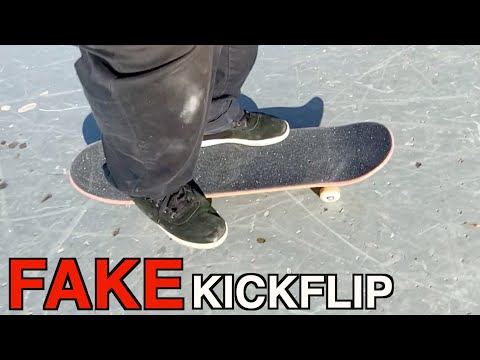 6:57
6:57How To Kickflip The Old School Way
Jonny Giger— 4:21
4:21How To Kickflip | Skateboard Trick Tutorial | Slow Motion
Skiddy Skates— 4:18
4:18How To Kickflip With Ricky Glaser
Ricky Glaser— 8:12
8:12How I Would Learn To Kick Flip Again! (Regular Step-By-Step Guide)
YUNG WAVY— 12:11
12:11Why Does Your Kickflip Spin Backside? (1/2) Foot Placement And Shoulders
whythetrick—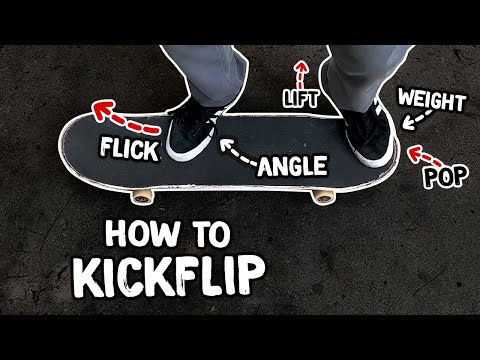 10:22
10:22How To Kickflip - Beginner Skateboard Tricks Tutorial (Slow Motion)
Skiddy Skates— 19:07
19:07How To Land A Kickflip Quickly
Skate IQ—